Perry’s Department Store
Our assignment was to work with a partner to create a buying plan for Perry’s Department Store. Perry’s is a fictional department store used as a simulation for students in retail buying classes.
Executive Summary
This report will introduce the buying plan for Perry’s Department Store’s Mid Atlantic region for the upcoming fall/holiday season. We, the buyers, researched out competitor, Nordstrom, to help plan for this season. This helped to choose vendors and figure out who Perry’s target consumer is for Women’s Contemporary department. Through thorough research, Innovators is the profile that will be the most likely to shop at Perry’s.
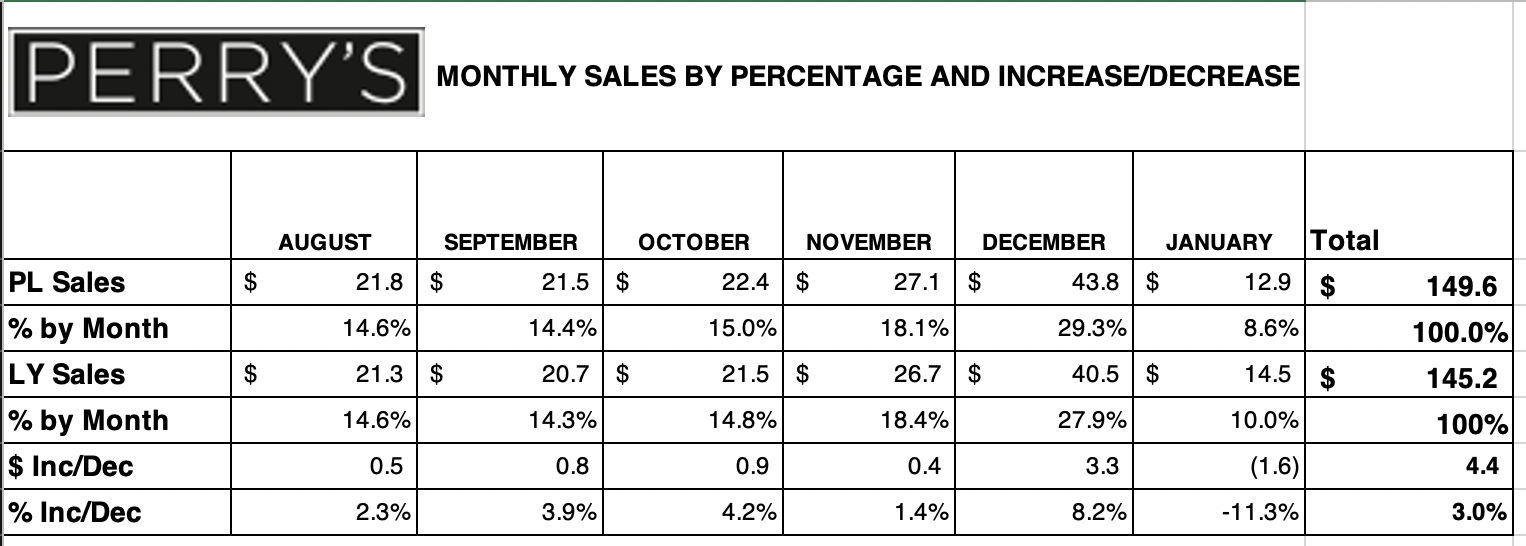
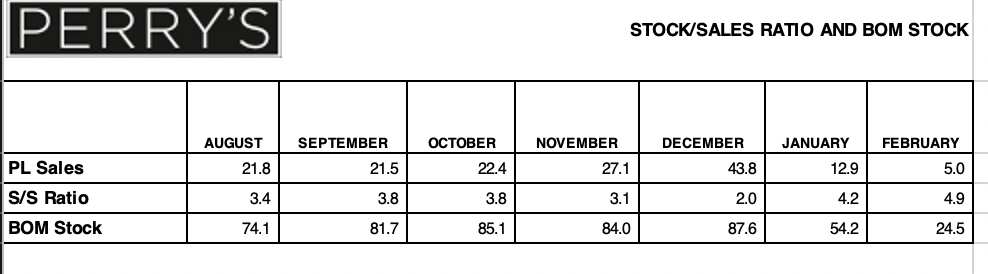
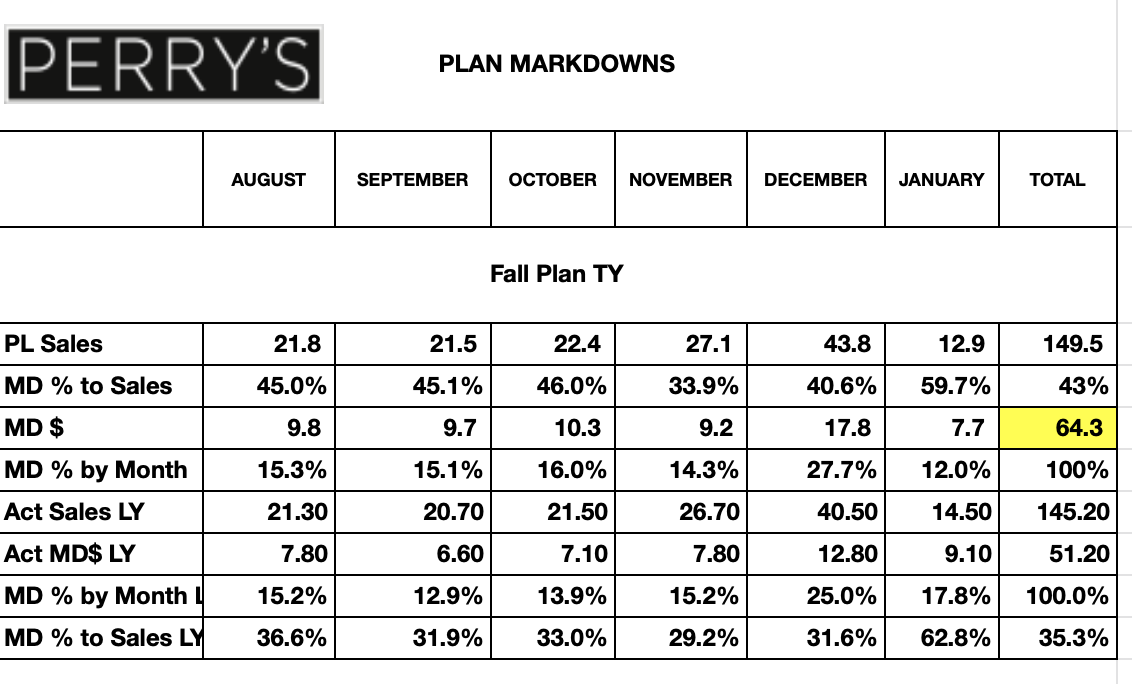
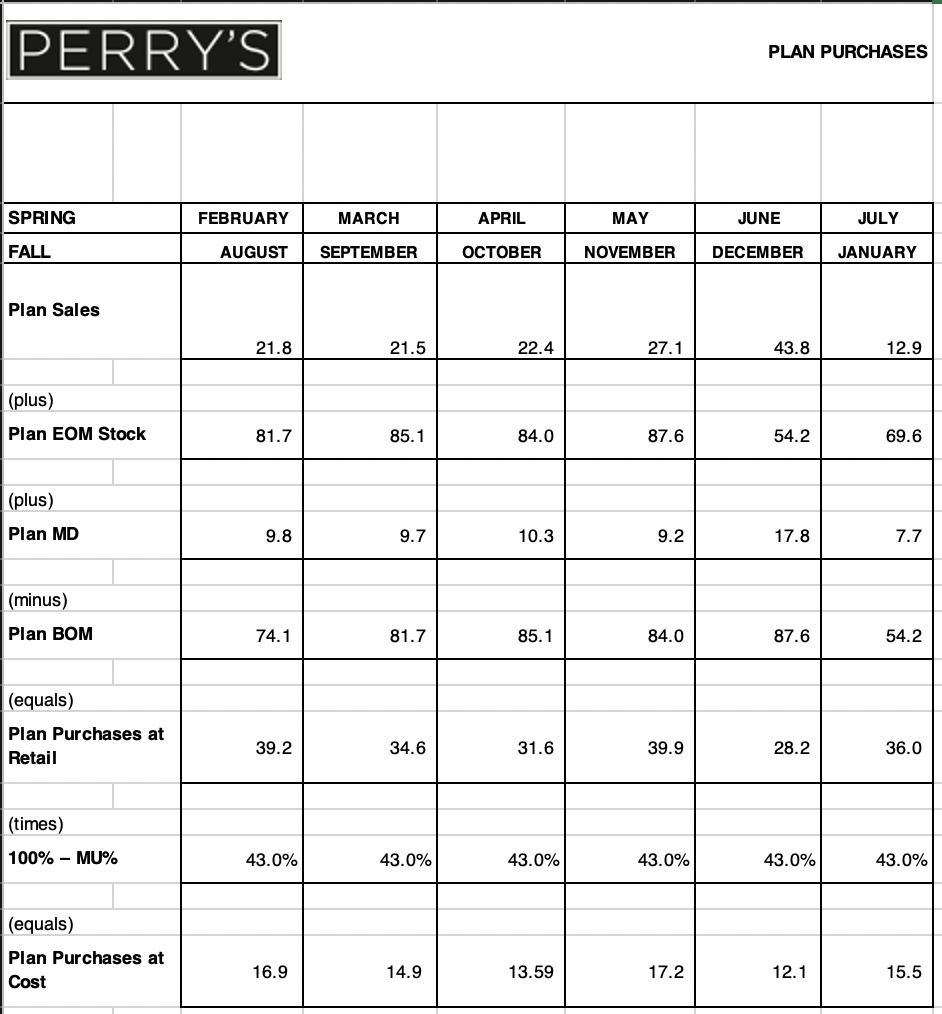
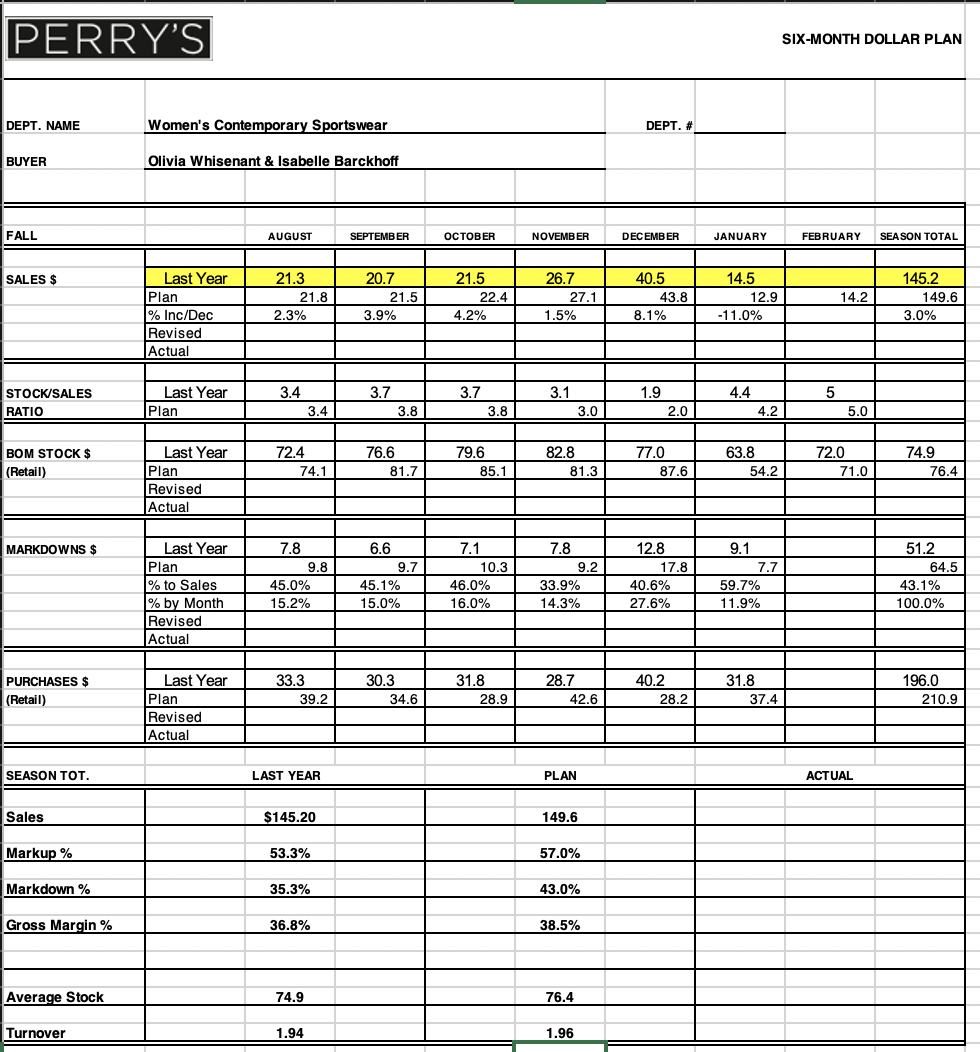
A six month buying plan shows an increase in overall sales by 3 percent for a total of $149.6 million sales for the fall/holiday season. The overall sales were based off of research found through the National Retail Federation and proposed promotions throughout the season. Each month’s sales, BOM, and markdowns are also justified based off of research, predicted promotions and markdowns.
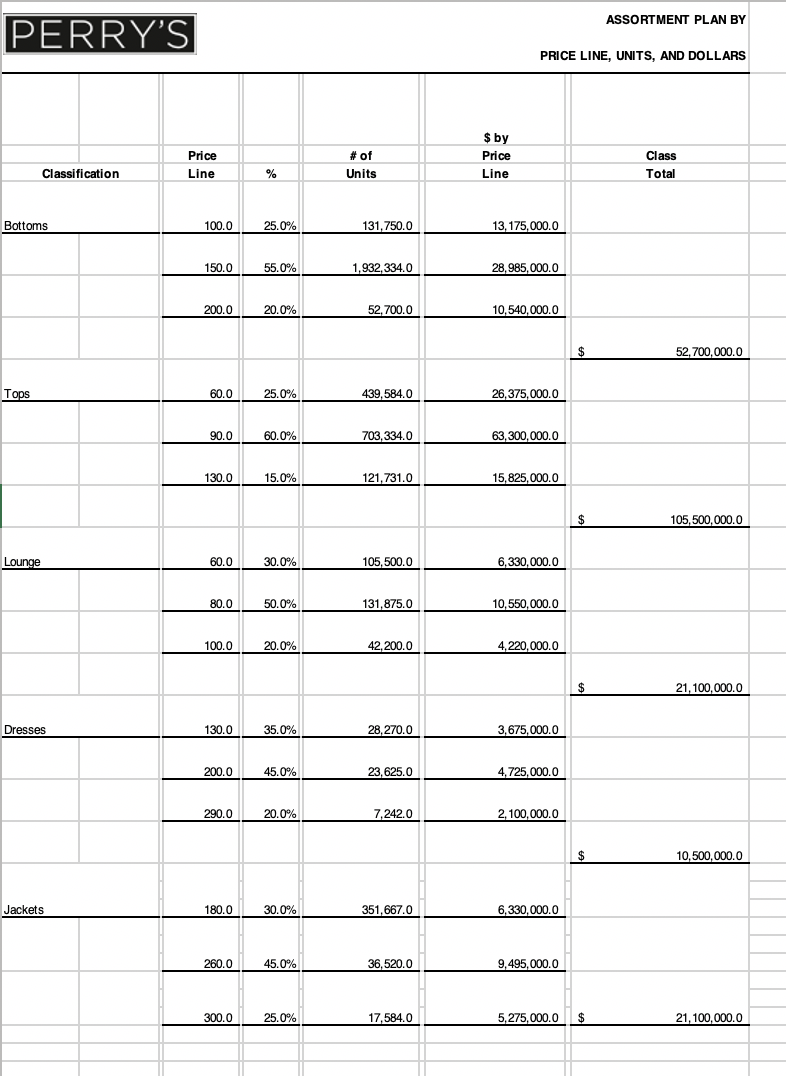
Each vendor was carefully chosen based off of research from the competitors, through the vendors websites, and based off of our target consumers. Each vendor is justified within the report. Price points for the merchandise are displayed in the 4.10 worksheet and are based off of our competitors retail pricing and the vendors pricing. A purchase order is also presented within this report to show how future orders might look for this season. Lastly, work journals and references are included to show the recorded time and research done in order to create this buying plan.
6-Month Dollar Plan
Justifications
Overall Sales Justification
Perry’s Department Store will have an overall increase in sales by 3 percent this season due to several internal and external factors. Starting with, on December 15, 2019, there will be a delay in tariffs for some goods coming from China. This will be an external factor that directly affects the total sales for this upcoming season. According to the National Retail Federation, the tariff level will raise from 10 percent to 25 percent on $300 billion worth of goods. “Shay noted that retailers are expected to import near-record volumes of merchandise ahead of the tariffs that are scheduled to take effect on a wide range of consumer goods from China on December 15” (McGinty, 2019). This will affect both December and January sales for this season. The Trade Partnership Worldwide, LLC states, “Americans would pay $4.4 billion more each year for apparel, $3.7 billion for toys, $2.5 billion for footwear and $1.6 billion for household appliances” (Trade Partnership Worldwide, 2019). The National Retail Federation forecasts that consumers will be in a better state financially for this holiday season. This will allow for consumers to have more disposable income to spend on gifts for others, as well as gifts for themselves. In addition, it will help move the large amounts of merchandise that was brought over prior to the tariff increase.
Moreover, the NRF President and CEO Matthew Shay said, “Consumers are in good financial shape and willing to spend a little more on gifts for the special people in their lives this holiday season”. “Retailers are fully prepared to meet the needs of holiday shoppers looking for that perfect mix of sales, quality and selection” (McGinty, 2019). Consumers will be willing to
spend more this holiday season, not only because of the major promotions, but also because of their larger disposable income. This will help Perry’s overall sales increase compared to last year’s season’s sales.
According to the NRF, “This year, more than two-thirds (68%) of holiday shoppers say they plan to continue browsing and buying in the week after December 25” (Cullen, 2018). The end of the year sales will keep the younger generations interested in shopping after the holidays. Another contribution is the need for consumers to return or exchange unwanted gifts. The vast majority of those who will make returns will do so within the first month of the post-holiday season (Cullen, 2018). These external factors can account for both an increase and decrease of monthly sales during the December and January months. More than three quarters of consumers are more likely to purchase something when returning merchandise, according to the NRF.
The 4-5-4 Calendar plays a major factor in monthly sales for this season. Due to there being only two days left in November after Thanksgiving, we can see a smaller increase in sales than normally expected. However, this does benefit December in a major way because December has five weeks this year. Cyber Monday now falls within December, which was not the case last year. This will attract many consumers who are not brave enough to shop in stores on Black Friday, to shop on Perry’s new website. Consumers will also use the last week of December to take advantage of the after Christmas sales. This will give consumers a chance to use their new gift cards they received for Christmas.
Perry’s Department store plans to create a website to become more accessible to consumers. This will also allow for Perry’s to participate in Cyber Monday, which is one of the most profitable days out of the year. The website will help to significantly increase sales during the month of November and December. The website will be up and running during September. However, we predict that we will not see a major increase in sales through our online store until
late October or early November, after the website has been consistently running smoothly. In addition, it will take time for consumers to learn how to navigate through the new website and spread the news about the launch through word-of-mouth marketing. Another benefit to creating a website, is it will allow for consumers to access Perry’s Department Store in locations where there is no Perry’s location. This will make Perry’s accessible to nearly everyone and will be able to reach an entirely new customer base.
We, as the buyers for Perry’s, have decided to also hold an exclusive promotion for Perry’s Perks members during the month of October. This will help to spark an increase in sales, since October is not a huge shopping month for consumers. By doing the member only promotion, it’ll persuade customers who are not members, to sign up in order to receive the discount. As the number of members increase, so will the amount of consumers receiving Perry’s emails about exclusive deals and promotions.
Perry’s will also hold a student teacher discount during the month of August going into the month of September that will be off of one full price purchase. This will bring more consumers who are teachers and students into the store that may have never shopped at Perry’s,
or who don’t shop at Perry’s very often due to the higher prices. According to the NRF, by mid-August, consumers had completed just over half (54 percent) of their back-to-school shopping (Jordan, 2019). Moreover, the discount will attract back-to-school shoppers. Therefore, Perry’s will hold a back-to-school promotion, which results in the reasoning for allowing the student/teacher discount to only be used on one full price purchase. This back-to-school promotion will happen the first two weeks in August, since by this time consumer’s will have done over half of their back-to-school shopping.
Lastly, Perry’s Department Store will host a Labor Day promotion, which continue the back-to-school celebration. This will be the last weekend that teachers and students can use their discount off of one full price purchase, because the back-to-school season will be officially over. Overall, the fall/holiday season sales will have many factors that will internally and externally contribute to the overall sales.
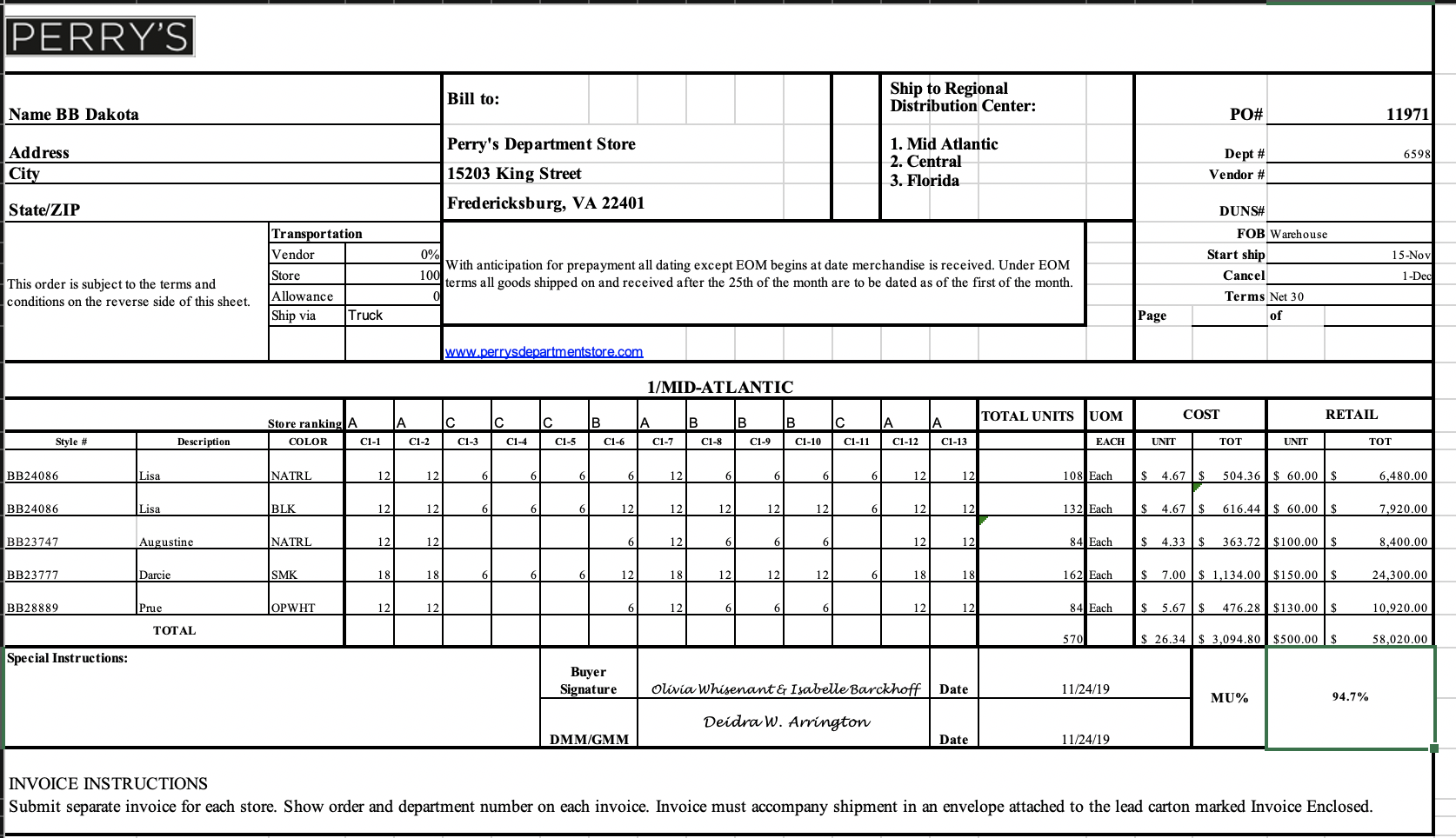
Above you will see a snapshot over our purchase order. This shows what we are purchasing, how many units and where each unit is going. It also displays the cost and retail of each unit.
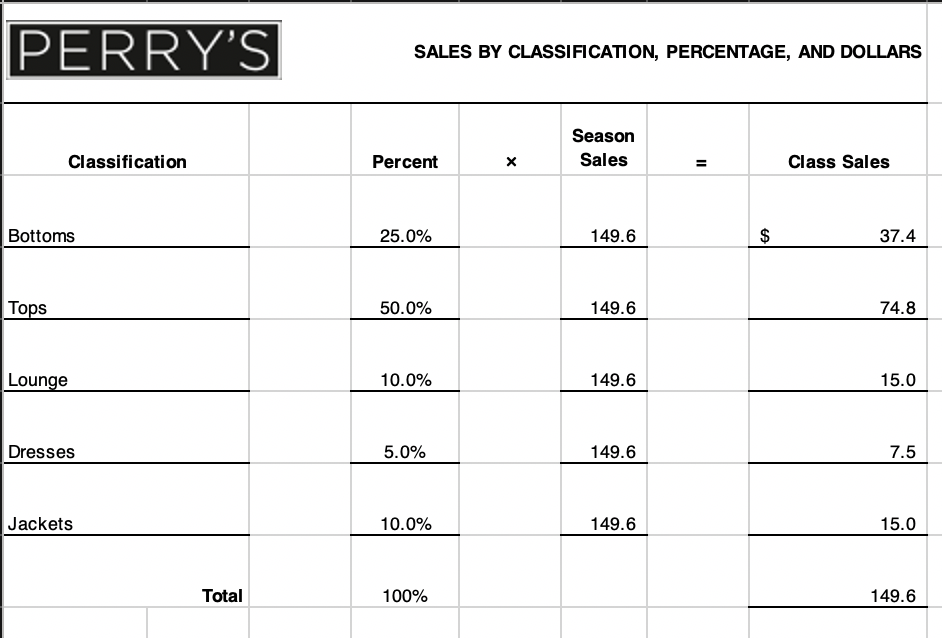
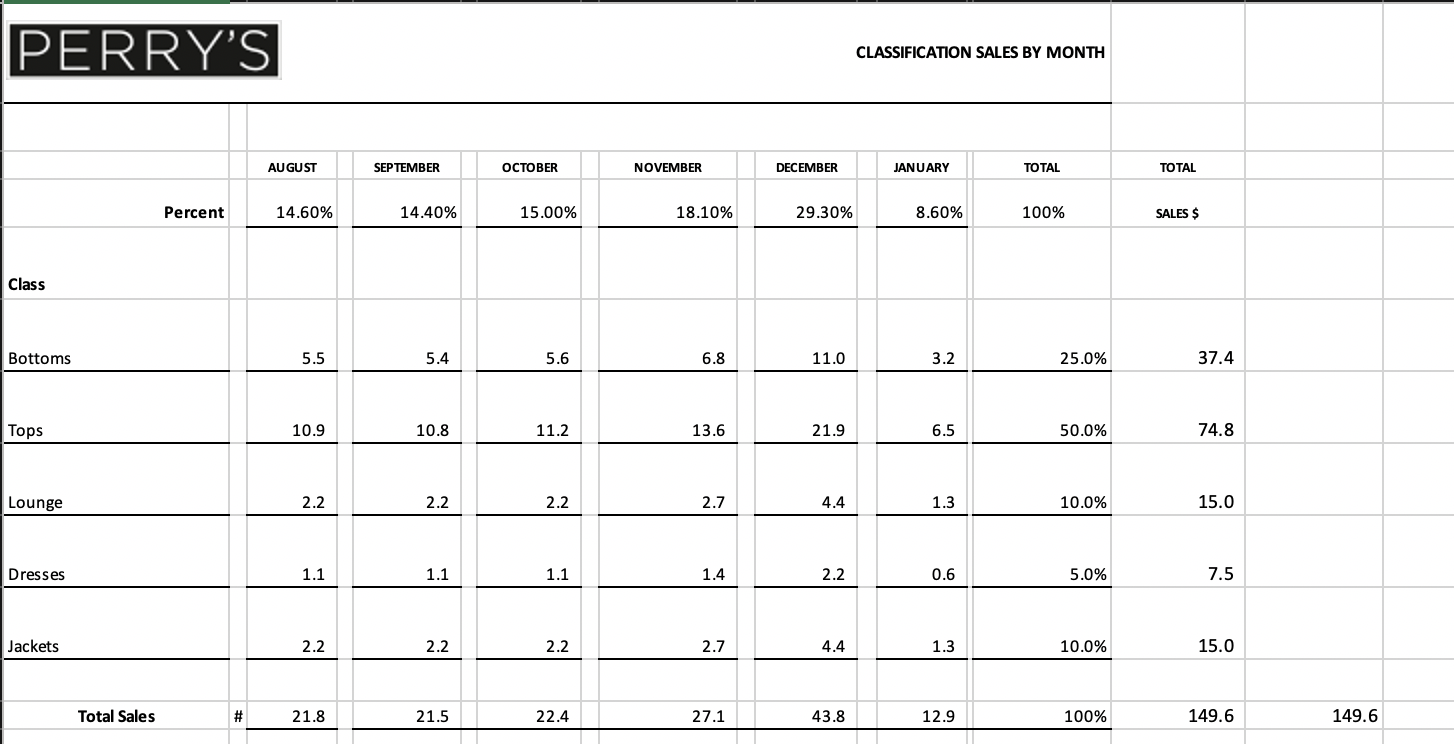
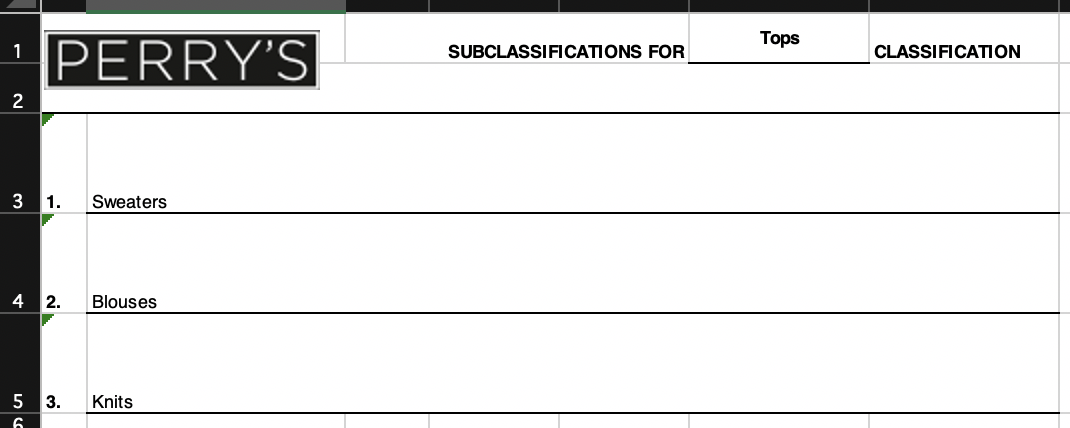
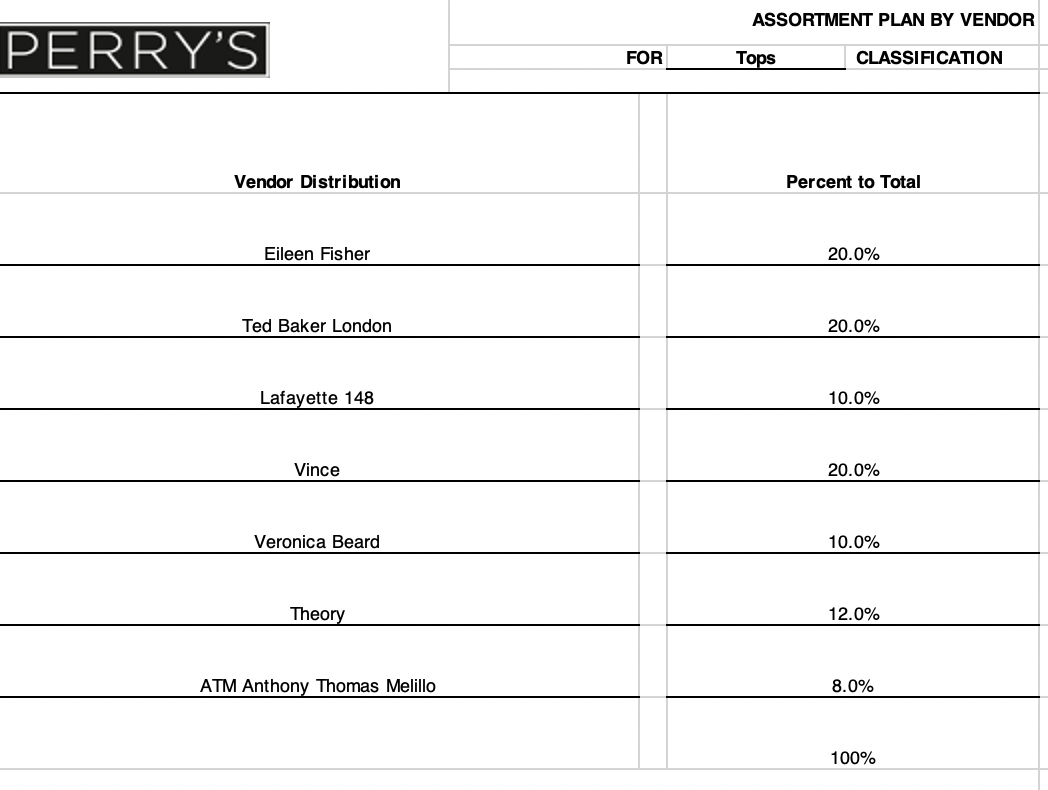
Below you will find a reel of excel sheets that display each step we took to create the fully buying plan. These excels include sales, classifications, vendor plan, and assortment plans.